Straight Up Fiction
The Quiet Rebellion Against Literary Gentrification
By Robert Cavaliere
It began, as so many literary movements do, with a moment of personal frustration articulated into a makeshift manifesto. A writer, pressed to define his work within the neat shelves of contemporary genre—was it literary? Commercial? Speculative?—replied with a phrase that felt both defiant and self-evident: “I just write fiction. It’s straight up fiction.”
This was not a term pulled from a critic’s glossary or a MFA workshop syllabus. It was, as the writer explains on his podcast, Hacking It! Writer by Trade, a coinage born of necessity. “It’s my own word because… it’s not a word that exists,” he says. “It came about really just my own thing.” Yet, from this small, irritable seed, a broader critique of the modern publishing landscape has grown—one that questions who gets to tell America’s stories, for whom, and why so many contemporary narratives feel airbrushed of lived experience.
“The current landscape in publishing is anything but straight up fiction— it’s commercial, it’s frills, it’s pandering to an aesthetic that’s designed by a group or groups of elite writers.”
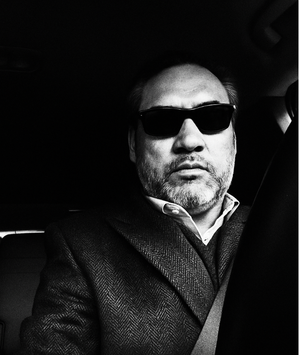
The writer, who speaks with the urgent, meandering cadence of a late-night radio host, positions “straight up fiction” as a corrective. It is a call to strip away the ornamental, the pandering, and the programmatically “likable” in favor of something grounded, immediate, and. His grievance is not with popularity itself, but with a system he sees as increasingly detached from the granular realities of everyday American life. He sketches a literary establishment populated by writers who “may be in touch with what we live or may not be. Maybe they don’t even live in the cities, maybe they live in Iowa fields or something.”
The comment is deliberately provocative, waving away nuance to capture a feeling of cultural dislocation shared by many readers and writers. It’s the sense that the stories being amplified—whether by big publishing houses or algorithm-driven studios—often feel processed for a global, homogeneous palate, leaving little room for the small, the specific, the unvarnished, and the locally true.
This sentiment, however, is not merely a lament. The podcaster reframes it as the potential catalyst for a movement. “It’s more that I want to reach out, that I want this to be the voice of something like a movement that I think is starting already,” he explains. The goal is reclamation: “starting something that’s old and starting it anew, and that’s telling our stories here in America.”
To understand what “straight up fiction” might be pushing against, the writer points an unexpected finger: not at decline, but at vibrant, foreign success. He is an avid consumer of Korean film and drama, a fan since “before it was fashionable.” For him, the global ascent of Korean storytelling, culminating in phenomena like Squid Game, offers a revelatory mirror. “Their ways of storytelling tell me, these guys aren’t following the playbook because how could they? They’re not writing for Hollywood. They’re writing for their own audiences.”
The lesson is twofold. First, authentic, culturally-rooted storytelling possesses a universal power that no focus-grouped, globalized product can manufacture. Second, it highlights a perceived vacuum in the American creative sphere. There was a time, he recalls, when American culture was “youthful” and ubiquitous, when “we had something to say and we didn’t care who heard it, but we had to say it.” That confident, idiosyncratic voice, he fears, has been muted by commercial imperatives and a loss of creative nerve.
“We’re coming around the bend, and the real story is just around the corner.”
This is where “straight up fiction” pivots from critique to proposition. It is a plea for narratives born of “our cities, from our lived experience,” though he is quick to clarify, “it doesn’t have to be the cities, it’s wherever you are.” He yearns for the “small stories” that have been crowded out: the lawyer, the mobster, the intimate human drama not designed as a franchise launchpad. His intended audience is the generation caught in the digital pivot—those who remember a world of analog interaction and now crave stories about “the human element,” about people who are “glued to a phone” not as a thematic backdrop, but as a complex condition of modern life to be wrestled with, not merely depicted.
“We got to grow up. We got to be cool,” he says, a bit cryptically, suggesting that contemporary fiction too often prolongs a narrative adolescence. “Straight up fiction” would instead engage with adult complexities in an unflinching, realist tradition.
Realism, then, is the beating heart of this idea. The writer, despite his skepticism toward the “fancy and inaccessible” connotations of “literary” fiction, is essentially championing a revitalized, democratic realism. He defines literature’s power in profoundly intimate terms: it is “the longest conversation you’ve ever had with a dear friend.” A novel is a 15-hour dialogue that “speaks right to… the human mind and the human soul. And the human heart.”
This is the “straight up” mission: to use the tools of narrative illusion not for escapist spectacle, but to forge that deep, protracted connection about things that matter. It is a return to the core revolutionary principle of realism, which “is a way of speaking to the persons that never were important. They never were the heroes of yore… They’re just regular guys like you and me. And those regular guys have inner lives that are rich and that are worth talking about.”
“I want to hear your stories. I want to hear them again, because I don’t see them very much.”
The writer acknowledges his own internal wrestling with “the idea that we’re in decline.” But his epiphany—the “small epiphany” that is “a big thing”—is ultimately optimistic. Decay and crossroads are not endpoints; they are preludes to renewal. “We are, yes, at a crossroad, at an intersection, but we’re coming around the bend. And around the bend is a whole new thing. And that whole new thing actually looks a lot like the old thing.”
The silver lining is literature’s own stubborn persistence. It is, in his words, “unadaptable in a way… it persists.” The human need for story cannot be extinguished by market trends or digital distraction. It simply awaits new voices to channel it. The fear he articulates is generational: “if we miss a whole generation of telling our experience… we’ll lose the here and now. We’ll lose it all. And that could be a real tragedy.”
But the hope—and the raison d'être for his podcast and his coined phrase—is that a correction is already underway. New writers are waking up. Their minds are turning away from prefabricated aesthetic playbooks and back toward the raw material of their own existences. They are, in essence, preparing to “hack it”—not through trickery, but through the honest, arduous craft of building compelling illusions from truth.
“Straight Up Fiction” thus stands less as a rigid genre and more as a banner—a declaration of intent for writers feeling alienated by the current categories. It is a call to ignore the pressure to pander or pre-digest one’s worldview for easy consumption. It is an argument for the enduring power of the grounded, the specific, and the real, even when that reality is, itself, a carefully wrought illusion. It believes that American stories are waiting to be told anew, not by a distant elite, but by those living them, in all their unadorned, “straight up” glory. The conversation is long, the night is deep, and as the host signs off, the microphone remains open, waiting for the next true voice to come on the air.