Nick Drnaso’s Sabrina: A Quiet Masterpiece of Modern Dread
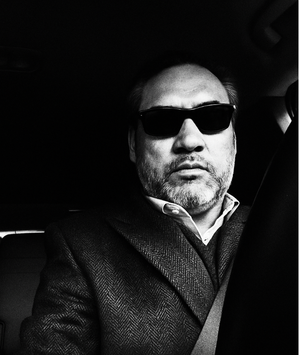
“Talk to Nick Drnaso for more than a few seconds and you hear in his laconic, muted voice a longing to be somewhere—anywhere—other than in the spotlight.”
“Sabrina is a book that’s difficult to describe, and probably best left undescribed for those who haven’t read it yet.”
“The characters are drawn with simple, cartoonish lines, but Drnaso wields each line like a watchmaker pondering how one tiny gear should fit into another.”
Nick Drnaso’s Sabrina is not just a graphic novel—it’s a haunting meditation on isolation, paranoia, and the insidious spread of misinformation in the digital age. The Chicago-based cartoonist, whose name is whispered with reverence in comic circles, made history when Sabrina became the first graphic novel ever long-listed for the Man Booker Prize. Yet, for Drnaso, the accolades seem to exist in a distant, almost surreal realm. “It’s hard to convey it without seeming dismissive or ungrateful,” he admitted in a rare interview, “but I kind of just glossed over the email.”
Sabrina unfolds with eerie restraint, following a cast of unremarkable Americans whose lives are upended by a violent act and the internet’s voracious appetite for rumor. The story’s power lies in its quietude—Drnaso’s spare, precise artwork transforms mundane settings into landscapes of creeping dread. His characters, rendered in deceptively simple lines, feel achingly real, their emotions laid bare in the spaces between panels.
The novel’s genesis was fraught with personal turmoil. Drnaso initially canceled the project, grappling with the weight of its themes—abduction, online exploitation, and the commodification of tragedy. “I just made this book about an innocent person who’s abducted and slaughtered,” he confessed, “and I looked at my own life and my own behavior and really just didn’t feel that good about putting out anything personal.” His eventual return to the manuscript involved reworking key sections, particularly those centered on Sabrina’s sister, Sandra, whose story became a counterpoint to the novel’s darker currents.
Drnaso’s reluctance to bask in the spotlight is palpable. When asked about the Man Booker recognition, he demurred, “It’s just so large, it’s hard to know what it’s fully all about.” Yet, the book’s impact is undeniable. Sabrina lingers in the mind like a half-remembered nightmare, a testament to Drnaso’s ability to distill complex emotions into stark, unforgettable images.
In an era where sensationalism often drowns out subtlety, Sabrina stands as a quiet rebellion—a work that demands attention not through volume, but through its unshakable, unsettling truth.
What is it about Drnaso’s work that resonates so deeply in today’s cultural landscape?