Doubling Down on Humanity
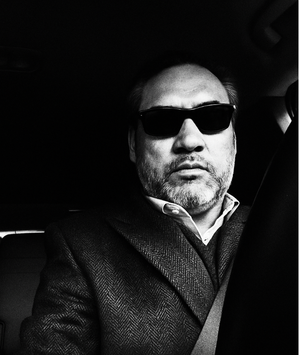
Based on Doubling Down on Humanity Episode 14 on the Hacking It! Writer by Trade, hosted by Robert Cavaliere.
Maybe it's the cold weather, the snow falling, the temperatures dropping.
Have the country enveloped in white and windy stormy conditions. It's got me thinking about wanting to commune, wanting to be in something participatory, something live.
It could be a live jazz show, it could be a theater performance, it could be an exhibit of some kind, performing or visual or a combination of all those things. I can't remember the last time I went to a photographer's session, something like that.
Or maybe it's the perfect weather to reflect, to go back into ourselves and think about what direction our art is going.
Or forget that, what about just picking up a book and reading it and falling into the whole craft of that, the design of someone else's mind is very alluring.
It would be nice, I wonder sometimes, if that's all we did and that wouldn't be such a bad thing.
I mean, there's plenty of things that people do that admire that are part of this whole art form that make it go forward without people that think very carefully, that critique, and it doesn't have to be just the professionals.
It can be the people that buy these things, our books, our art, whatever it is, and how they consume it and how they make it their own. Yeah, a cold snap like this does make you think.
It makes me think about the people that are facing the cold, while so many of us cozy up to our reading, around the hearth, all over the country. The cold parts of the country, right now, there is a lot of people fighting for a lot of things.
And some of those people raising their fists and raising their voices, you know, in those very cold states, they're losing their lives. Some of them are losing their voices. They're being quieted down.
Then there is the machines, the machines that are supposed to augment us. Oh, wait, that's what I'm supposed to say, right? Augment us, make us better, not replace us.
No, because they're not thinking machines. And the nice thing about that is that we can stop thinking about them for a little bit. The reason for that, I mean, don't worry, this isn't going to turn into some kind of long rant or reflection on AI.
Everybody's getting sick of hearing it and I'm glad they are. Because it's been quite a bit of a blown up on this hype of the AI of how it's supposed to create a disruption into the arts. But the pushback has been loud and clear.
So if you're worried about me going at length about the technology, don't worry. This episode is not going to be about that.
AI Pushback
But we do have to acknowledge what is behind this pushback. And who's pushing back? Surprisingly, a lot of the people that are pushing back are the younger generations.
The Generation Zs. Maybe even the A's. The Alphas, so called.
And, of course, now the rest of the Generation Zs. The ones that are in their 40s, like me. Maybe the ones that are in their 50s are thinking about what these young people are supposed to absorb and take and follow.
But they're not doing that. It's not going according to plan. You know, the guys that are pushing this so much?
You know who they are? They're guys in their 40s and 50s desperately wanting to be relevant, desperately trying to be, I don't know what you call that, some kind of guru of technology and change and strange ideas about innovation and progress.
What progress? Look at the state of our culture. Look at the state of it.
When I'm making a political commentary, because this is not a political type of show, type of episode. It's not my thing really, but culture is, and we all partake in that in this American culture.
Not only that, but our loud mounts are heard all over the world, and they're taking notes. So there are people who think differently. I read about this guy, this kid, over in the Colts States, another Colts States, not Minnesota, but Anchorage.
Anchorage, Alaska. Actually, maybe it was Fairbanks, somewhere in there, now that I think about it. So there's this exhibit that's being put on, and there's a visual art show.
I take it, it's photography, it's painting, that sort of thing. And in this exhibit are included these AI produced works. And one kid shows up.
I call him a kid, but he's a man. He's a hell of a man. And he shows up, and what he does next is what we're reading about for the next few days.
He takes all this artwork and just starts chomping it down. That's right. He just eats it.
He eats the so-called AI artwork. And he says, this is not art. It doesn't belong here.
He's a gangster. What a gangster. It's a gangster move.
That's rebellion. That's having a voice. That's a move the freaking AI didn't see coming.
And all these guys that are producing things with this sort of enhancement, they're starting to realize, wait a minute, maybe this isn't the way to go. People, it's rubbing against them.
The people that are supposed to be adopting it at a very fast pace, they're not. They're going the other way. They're wanting to look into VHSs.
They're wanting to look into records. They're wanting to look into typewriters. They want to feel and hear.
They want to be human again. So what do we do? That's what we do.
We go back to work. We double down on the human. I've been saying this for a while.
I've been thinking it for a long time. I've been thinking about these things pretty, I would say, consistently. For even before I was really on the news or anything, I was thinking about this back in 2015, 16, 17, eventually around 2020.
I got to work on bigger themes. And basically, there's no, it's called Borderlands, and I won't get too much into the weeds of that, but it makes me think a little bit of that cold snap I was talking about, because I feel cold in my heart.
Am I not going to make it? Are the ideas that I have there, are they passing by? Are they not going to be listened to?
What am I talking about? I'm talking about some of the things that are worrying me right now I was already writing about. And that's something I still got to struggle with.
I got to do the work. I'm doing the work. It's almost done.
But now comes the hard part. It's going back to work, back to this meaningful work. So where I had all these doubts, I should rephrase that.
I should give more context. And here's what I'm trying to say.
Writerʼs Struggle
I was thinking that everything I've done, it was just going to be irrelevant because now it's already a really hard publishing outlook, right? The publishers are getting together, they're becoming even stronger conglomerates.
The publishing situation in America is that you have to approach an agent and sell your work that way, and then that agent sells it to a publisher that might be interested, that might be a smaller publishing house owned by one of these conglomerates
because nothing is independent so much anymore. And then eventually you get your shot. A couple of years down the road, let's see if you even get a shot, and you're supposed to be doing all the work to promote this thing.
But it's about getting back to work.
And so that was the name of the game back then, and then this whole thing, AI, enabled a lot of people to write all this slop, all this crap, and they did it very quickly, very, very quickly, putting all these fake books, putting all these things,
and it distressed me. It distressed me a lot. Because it's a very intimate thing. I mean, this is really encroaching into my arena, into my sense of self.
As a reader, I started to think, I want to read something that has been lived through, that an author has put together. And I thought I was alone, but it turns out that I'm not.
So it's kind of like an infusion, like a cold bucket of water infusion of a wake up to a reality that I think is happening, which is actually not this nightmare of throwing ourselves to this... It's not even AI, okay?
It's like an automated predictive text deluxe. It's based on thievery. It's based on taking a lot of author's work, and re-brandishing it.
Just like it happened in its been happening to visual artists, to painters, to photographers, to those who deal with imagery, to graphic artists, those who deal in that trade, decimated by this so-called innovation, the so-called progress.
It's interesting how our word that's supposed to mean forward movement toward better conditions or at least different conditions depending on the subject.
Certainly a better situation is when we think of progress, we think of something rudimentary and something progressing that is better, is more sophisticated.
In our society, which is supposed to be a democracy still, it should be something that's equitable, something that promotes that individuality and that respects human dignity and human rights. But it's not. Not in this sense.
This is not progress. This is a depression. And the young, they're realizing without really putting it into so many words, what they are doing is they're getting together.
And the things they don't like, the things that they see are unjust. They're getting together. And you can't do that with clicking little things for next videos on TikTok or whatever, and seeing people do their dumb little dances.
That's superfluous. It's almost good that it's so bad, because it's waking people up. I hear so many people going to these things, these gatherings, these protests, these things, and they are awakened, they are thrilled.
And as we used to say back in the day, they're stoked. Yeah, you stoked the fire. That's what you did.
You stoked the fire. So now you've created a culture and a counterculture. Now you created people that don't like the state of things.
And they're pushing back. They're not going to take this as an answer towards so-called progress, because in their point of view, it's not. So what do we do, us readers and writers, us people that engage with art?
This is what this show is supposed to be about, this episode, the trajectory of this poor old writer and the state of things. I think it means that we put our nose back on the grindstone and get the work done.
I think it means that we do it in a way that's engaging. It can be engaging. It could even be entertaining.
But it can't be predictable. It can't be formulaic. It can't follow a recipe.
It can't be a template. It can't be something that somebody else does for you. Come on.
But if you want to go that route, then there's your answer already. And they're gathering all over the country to say, no, and to say no not only to this, but to many other things. So we bring back the element of surprise.
A long work of fiction is aptly called the novel because it is concerned with the new. It's novel. It's a new thing.
We're always looking to find things that are the new thing. And we do it in literature. We do it in art.
We do it in many different venues.
I wonder though, what would have happened if things hadn't gone the way they seem to be going, which is a backlash, a 180, a confrontation against this assault on our human dignity and the things that really mean intrinsically what we are, who we
are, that define us, in other words. What if it had gone the other way? In other words, the AI wins, wins it all. Readers, market share, accolades, awards.
That is now looking very doubtable. It's not looking to be going that way anymore. So it's back to the same old foes, the ones I was talking about, the inexorable forces of publishing, that mode around the goal.
Finding a publisher nowadays through the agent and focusing on marketing and all these things, that's what's defining the trade now. That's the reality. Not in every country.
America, I mean, we're talking about American fiction here mostly, but I'm concerned with all fiction. Maybe it's no coincidence that a lot of these awards are being awarded to a lot of Hungarians. Maybe they know what's going on.
I spent a bit of time in Hungary, in Budapest, which is an amazing city, terrific in every way, very moody, very atmospheric, and the people were thoughtful, introspective. It was the early 2000s, and there was still a sense of the old world.
I can never forget that. So it doesn't surprise me that the last Booker Prizes and so forth, Pulitzer Prizes, all these concerts are going to them. I'll talk more about awards down the road, maybe when the award season kicks in.
I'll just say that I wouldn't put too much into it, too much attention to it, because awards, in a way, they've got their place, they point the way. The idea of a winner takes all is problematic for me in the arts.
I can never decide that one thing is better than everything else. It's really difficult to assert that. And also, who's making those decisions?
A lot of the best and most significant writers, if we want to define best by the impact that they have on readers and the longevity, how long they stay in the culture, they didn't win any awards. They hardly won any awards.
They didn't win the book or they didn't win the pistol. They didn't win these things. So, you know, you tell me.
It's still something to look at. You're probably going to be finding a good read that way anyway.
Literatureʼs Resilience
And so, with all the assaults on the writer, on literature, on what this is, this thinking art, can this art form withstand, I wonder, the short attention spans, the new versions of illiteracy? I believe it can.
It survived worst, rising from the dark ages of abject ignorance to book burnings, even in the 20th century to book bans nowadays. Literature has survived it all.
It is a uniquely human technology which contains, like no other form, our essence, our dreams, our voices. And so we double down on humanity is what I say.
Doubling down on humanity then also means doubling down on our own humanity, our own frailty, our own imperfection, our own doubts, our own fears. And boy, if you're, I think that if you're a reader, you've got to have fears too.
I didn't realize that. Of course, I'm a reader, but I'm also a writer. So I think more about those fears.
I think about the trepidation that we have. And sometimes because the work is so solitary in nature, you tend to think that these things, you're the only one worried about them. And I got to listen to an interview not that long ago.
I think it was about a week ago. This writer, and he was talking about all the things that I was worried about. And it made me laugh.
It made me laugh because, you know, misery loves company, but it's also that communion. And that's what we need more of. We need more of us to stick together.
I'm not talking just about writers. I wouldn't like that. I think, and I've said it almost every episode, it comes down to the interplay between, if you're a musician, it's the music and the listener.
If you're a writer, it's the reader and the writer. If you're an artist, it's the work, the exhibit and the exhibit goer. We have to mingle, all of us.
And the artists too, we have to mingle. And it's not like anybody's going to twist our arm to do it. I think we would like each other very much.
But I think, and I know that if we're going to protest in the streets, if we're going to say no, this is not the way to go.
We should also kind of start looking inside of ourselves and realizing this wouldn't happen if we didn't come together into places physically, in person.
So go back to the bars, go back to the exhibits, go back to the cafes, go back, go back, go back, go back. And let's mingle. If we got to argue and fight a little bit, not with fists, I hope, but with words or whoever, let's do it.
I'm not all about, you know, singing kumbaya or everything. I think that a lot of the, a lot of the work that's being put out is because everybody's so afraid to say anything. And we need balls in this thing.
We need fists raised. And I'm seeing that now. And I'm a little bit, well, not a little bit, I'm quite a bit excited.
And I lost a lot of hope in the way things were going. I was sort of sinking into my own, my own thoughts of, you know, we're just kind of painting ourselves into a corner as a culture. And I think we are.
Don't get me wrong. But I also think we're seeing that we are. And then we're putting ourselves in a straitjacket.
We can't be followers. We got to say no. And there's got to be somebody that does.
And we got to show a different way. That's what art does. A lot of what art does is a counter to the way things were going.
You know, you might not have thought about it, but even like the waltz back in the 1800s was a counter to how dances were done and music was done. So much of art, so many examples.
It is a progression, but it's also a looking back and looking at ourselves and then looking back at where we come from and looking forward to what we want to be. And beyond all that looking back, just live in the moment, seizing the moment.
You know, I used to call it what? Carpe Diem. Now they call it FOMO or something.
But these common troubles, they affect us all. They affect us all, anybody who is in any kind of medium, it is affected by the greed of the corporations, the thievery that's happening. It's always been happening.
We know this, but we withstood it, because there was always our work and our originality and our voices. And we can't let those be suppressed. That's why I'm saying, let's not be so nice anymore.
If you've got something to say and you're mad, do it. You know, show it. I want to hear it.
Tell me. I got to thinking about, you know, when I was thinking about the whole AI thing and the kind of work that it produced. This is maybe a year ago and in the last months.
And it gave me a bit of demoralization. I was demoralized. I'm not going to deny that.
I was demoralized not because I didn't think that more original work wasn't going to be put out. But I was demoralized because I was thinking writers like me and much better writers somewhere in the world would have their voices finally quieted down.
Quieted down by the influx and the plethora of junk, of slop, of crap. And I thought, this is it. This is the end.
This is what it looks like. And I feel that it's not going to happen that way. And I feel it's not going to happen that way because intrinsically, we humans are still very rebellious.
There's still that sense of wanting to punch something. And not just to be violent. I don't condemn.
I don't condone that. But because we're frustrated, because we know that something's wrong, and because we know we got to fight. That's why.
I've got this book sort of fell in my lap by some recommendations and one of these things. And I want to pass on the recommendation. This is Gemma File's novel, Experimental Files.
It's a kind of mystery. I wouldn't call it horror at all, but I might be grouped into that. I would call it mystery suspense sort of thriller called Experimental Files.
It's about a character written in first person who is part of the film making industry. And she has a very minor role, this character, this female character in this whole thing. And it's very informed by the craft of film making.
Gemma File is the author. It just shows because she lived that experience. I read a little bit about her life, just a little bit, the blurbs.
And it said that, on the book, I think, and some of the reviews. And it's a book that surprises me. And I'm bringing it up, not sort of randomly, but because I like the randomness of how this book is put.
It's not random at all in the sense that it's chaotic. It's a little bit of meta-fictional in some sense, not at all in a putting off kind of way. You're not going to find it inaccessible.
It just has this sort of meta-voice. It's aware of itself, the character, the narrator. It'll point out.
And those are parts, I think, that I found a little bit harder to digest, but they're not there very strongly. It really is a straight up story.
It is terrific, the way she injects the experience that she would have had as a researcher of this novel and someone who lived through these things. So, it's a story that connects in a way that something that an AI could not connect.
It would make, for instance, there's a passage in which she is having a, you know, she's setting up the prose.
So it goes from prose in the first person about meeting a key character because she's doing research about this lost footage that is central to her scheme.
You know, she's trying to write a book about this lost footage that could have been Canada's first female filmmaker. So that's all fiction, by the way, but it's really terrific.
And in that, as she sets up the prose of that, then she goes into the interview, and then she does it, she does this sort of like, she switches to kind of explicating what's happened in the conversation, and kind of does little jumps forward, and
then she sort of does it as though, she says in one point that she's listening back to the recording, and in the book, the visual of it is, you know, you see like a transcript of that conversation. So she's got this conversation that's happened in
about three or two, to at least three or four different ways, different perspectives, different angles of it. You got to read it, I'm not doing it justice, but the reason I'm pointing that out is because that's a hell of a, that's a hell of a
something for us to connect. Yeah, we can totally get that, that that could be done. And I'm not saying it's, it is actually very creative, but I'm not saying it's like so inaccessibly creative to a writer.
It is not formulaic though, and that's not something that these AI systems would have done. She didn't consult some damn chat bot to figure out how to structure this. No, she thought about it.
How can I make this interesting? How could I spice it up? And she did it in all sorts of ways in these few pages.
And of course, the whole book is like this. It's because she thought about it and designed it. And only a human author can do that kind of thing.
If you want examples of the same old thing, then that template maker would have never chosen that kind of rhythm, or that, we don't want to call it rhythm, but that structure. It's only something that we could come up with.
And we'll continue to come up with, because we reason and we invent. Invention, that's our bread and butter, okay? And in the arts, that's what it's all about.
So verse of literature rises from a rebellious instinct. I'm talking about that because it's something I'm thinking about all the time. I mean, it is kind of a theme of this show.
How do we face the limit, the frontier? How do we give the middle finger to everything, if the middle finger is warranted? Yes, verse of literature rises from a rebellious instinct to show another way, other possibilities, other perspectives.
And we got to ask ourselves, what is the culture now? Since I'm talking about counterculture. The culture now is not this progression.
It's not kindness. It's not empathy. It's something completely different.
It's a whole different beast. Just to give you an idea, Holocaust Remembrance Day will have come and gone by the time you listen to this podcast. And what do we see?
What do we hear about every few days? Attacks and slurs launched against Jewish enclaves. Yes, the culture as it was, the culture as it is.
Can literature change minds and hearts? It's a question that's not really that open of a question for me, because I recall a long time ago, when I was, I don't know, a kid, 10, 13, 14, around that age, and I read the story of Anne Frank.
I read the story of Anne Frank. After reading the story of Anne Frank, I wanted to watch the movie, which is also really good. It's a black and white movie.
We went to, I think it was called a Hollywood video back in the day, or something like that. You know, they're not around anymore.
And I made, it was movie nights, and I made my mom picked at, even though we had visit over, and we wanted a lighter fare or something, you know, some kind of a comedy or something. But I wanted that also.
I thought it was a really good movie, and that's the first time I saw it. And I felt kind of weird about watching with other people. I wish I, you know, but I had to somehow push it.
The book, the story, it was something I sought out, but I believe it wasn't really even part of the curriculum. But it was hinted, it was suggested.
And it was something that helped me really put myself on the point of view of this young girl that lived a long time ago before I did. And it opened up a whole different thing in me.
No, I didn't grow up in a household that would have had any anti-Jewish sentiments, but neither would we have gone out of our way to have Jewish sentiments. We would have friends if they came along, they would be Jewish.
But I think that if we thought that that experience is bracketed, it's not, it keeps going. And this kind of literature and the things that we do, the things that we're exposed to, they do feed our perspectives and they can change our minds.
I'm happy about that. I'm happy that I saw that point of view. And I was very saddened by this story.
I remember, it hit me pretty big. I mean, I didn't cry or anything, but it stayed with me for so long till now. So yes, literature can have an impact, a tremendous impact.
I remember talking to my friend one time. I wish I had this, it's recorded in my mind. I might have mentioned it somewhere else.
And we're both young. He says, I think he was projecting his insecurity about writing to sort of say, you know, writing doesn't have to be this big thing. It doesn't have to, it's not going to change the world.
It's not going to do anything like that. And I think he was speaking very much of his own experience. He didn't want to be burdened by a book that would have to do that.
I mean, who would? It was paralyzing to think like that. But I thought to myself, no, it doesn't feel right.
I didn't have an answer to that, but it just didn't feel right. Yes, the things we read, the things we see, the things we listen to, they do have an impact in our lives.
And so we got to make sure that we're in the game, and that we're looking at art and making things part of our lives that make us question things and make us look at other perspectives.
Not because of some kind of sermonizing thing or some moralizing thing or the right thing to do. It's because it opens up your humanity. That's why.
Even if it's an open wound, if it does that, if it hurts you, it's fine. It doesn't have to entertain you every single time. You don't have to come out there with a shit-eating grin every time you watch something, every time you read something.
It can be something that is bleak. It can be something that wounds us, that hurts us. Because sometimes we need to be heard.
It's the only way we will understand the pain of someone else.
Support Humanity
So the origins of the movements that brought all of these things, where we are here in 2026, you know, were years in the making. And it started with thievery. It started with a long time ago.
It's part of our colonial history. Yeah, stole from the Native Americans. That's the first thing they did, by the way, if you don't know.
That's the very first thing they did. And now fast forward into the future, the far future, and the so-called puritanical work ethic. What do we do?
Oh yeah, let's deploy our corporate greed and steal from every author that there is. Because that's the way the so-called quote-unquote training is any kind of training. Don't be lost in the metaphor.
This is why it's important to look at words very carefully. And one of the things that they're using is, oh, we got to train this AI thing. Well, no, you're not.
It's not like it's a little baby that you teach words and goo goo gaga and all the way up to Shakespeare and tomorrow and tomorrow and tomorrow. No, this is a whole thing. This is just a complete ransacking of work.
It is just astonishing. So no, it's a metaphor, and the real thing is that they stole this. They didn't pay anybody.
Oh, they might have thrown a few coins to the big kahunas, the so-called, you know, the bigger movers and shakers of writing. Give them a few coins to shut them up, and they'll probably be happy with that.
But no, writers right now, if we're looking at literature and in every art, they need to rise up, okay? I don't want to tell anybody what to do, but we need to really think about that.
It's about workers' rights, it's about what kind of life we want to live, and again, that's what doubling down on human means, and it's going to be painful, and we're going to have to fight somehow, and we're going to have to get together somehow.
A few episodes ago, I hope you didn't miss it, I did cover John Steinbeck, so I hope you go back if you're listening to this and listen to that episode, I think it's episode 7 or something like that, that's from December.
I covered a little bit about his point of view about social causes and all that kind of thing. I didn't mean to come out of the gate today talking about, you know, tonight, talking about these kinds of things.
In fact, I told myself to kind of make sure that I wasn't in a state of mind that I was a few days ago, because a lot of things that have happened, and you know what those are, they have affected a hell of a lot, a hell of a lot of us too.
And I don't like the loss of life like this, of course. But the way the things are happening, I mean, that movie, what is that movie? V, Speculative Fiction.
It's about Guy Fawkes, well, not Guy Fawkes, but inspired by Guy Fawkes. You know what I'm talking about. If not, check it out.
Now, the Portman, the stars in it, terrific movie. But we're living that kind of scenario now.
And what that means to us is we just can't shut up because all these things that we like, the art that we like, the books that we like, the music that we like, it's not going to be around.
Literally, somebody's name is going to be plastered all over and you know who that is. It happens like that. It's always like that.
They tell you what they're going to do, and then they do it. And if you roll back, you're going to be rolled out. Oh, but not in these cold states.
No, yeah, this cold makes us think, and it makes us bitter, and it makes us cranky, and it makes us want to fight sometimes. So if you think that we're done, we're not done. No.
Because the nature of art usually means that it attracts open-minded, empathic, reasonable individuals. But these movements, these other movements that I'm talking about, I don't know.
This sort of culture right now is something that needs a counter, and we're going to give that counter. Because the subversion of that might also mean supporting the independent movement. Patronizing the arts.
Yes, even independent podcasts like this. Simply by listening, spreading the word. Let me know what you're thinking.
What you'd like to hear more of. On the contact page of cityscapepress.com. Let's wrestle with doubts, because that's what art does too.
This is what the literature is so good at. Doing. At exhibiting it.
At dramatizing it. At turning it inside out. It's our bread and butter.
If literature goes on, its persistence will rest on the symbiotic relationship between the reader and the writer. So, I ask you, if you're listening to this thing, let's get back into our humanity. Let's double down.
Let's support those things that are human. Not because it's right, but because sometimes when we're told all our instincts are counterculture, it feels right to be wrong.